 Villa Encantada
Guide · Textiles
Mallorcan ikat: a guide to roba de llengües.
Roba de llengües (in Spanish, tela de lenguas, “fabric of tongues”) is Mallorca’s traditional ikat: a cotton or linen cloth with a softly blurred, flame-like pattern, woven on the island for centuries. This guide covers what it is, how it’s made, where it works in a room and what to ask for before you specify it.
What is roba de llengües?
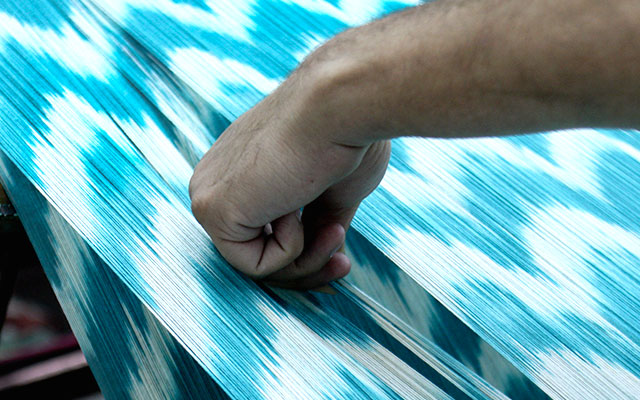
Ikat is a resist-dye technique: the yarns are tied off in bundles and dyed before they are woven, so the pattern lives in the thread itself. When the dyed warp is set on the loom, the colors shift slightly, which gives ikat its feathered edge. In Mallorca the result is a pattern of pointed, tongue-like shapes, the llengües, that gives the cloth its name.
The craft came to the island through Mediterranean trade and became part of Mallorcan domestic life: curtains, bedspreads and upholstery in island houses and churches. Today only a handful of family mills still weave it, some on looms that have run for more than a century.
What it looks like
- Classic colorways: blue and cream, red and cream, green, ochre and tobacco tones, often on a natural ground.
- Pattern: repeating tongue or flame motifs with soft, irregular edges. No two runs are identical, which is part of the appeal.
- Hand: a substantial, slightly textured cloth. It reads relaxed and collected rather than formal.
Where it works in a room
- Upholstery: sofas, slipper chairs, headboards, banquettes and ottomans.
- Window treatments: roman shades and unlined or lightly lined curtains.
- Cushions and bedding: pillows, bedspreads and coverlets.
- Hospitality: boutique hotels, restaurants and coastal or Mediterranean-inspired interiors where you want a sense of place.
How to specify Mallorcan ikat
Ask for these on every spec sheet before you present to a client:
- Content (cotton, linen or blend) and width.
- Pattern repeat, so your workroom can calculate yardage and plan pattern matching. Allow extra yardage for matching ikat repeats.
- Abrasion rating (Martindale or Wyzenbeek) for upholstery, especially seating that gets daily use.
- Shrinkage and care. Natural-fiber cloth can shrink the first time it gets wet, so prewash anything that will be washed later, or allow extra yardage.
- Lead time: small-batch runs take longer than mill stock. Build it into your schedule early.
- Flammability requirements for contract and hospitality use, which may call for a backing or treatment.
I found roba de llengües on a birthday trip back to Spain, and I’ve loved it ever since. It’s the cloth that started me writing about Europe’s family mills. — Kristina
